Tuesday, 31 January 2017

‘YOU GAVE ME THE ANSWER’ – Joe from the U.S. asks…

The next few months are going to be about all things Flowers In The Dirt, following the exciting announcement that the album would be the 10th release in the GRAMMY Award-winning Paul McCartney Archive Collection.

Flowers In The Dirt saw Paul team up with Elvis Costello to co-write a third of the album, the majority of which was recorded at Paul’s own studio in East Sussex. Joe from the US has been in touch to find out more about the dynamic between the two…

“What was it like writing and recording with Elvis? Did you learn anything from him in the process?”

We spoke with Paul in his London office a few weeks ago to find out,
“Thanks for your question, Joe. The answer is no! [Laughs] It was good! It was good fun actually. When we were about to start, I had said to Elvis that I kind of missed the way John and I used to write, which was sitting across from each other, with an acoustic guitar each. And I’d explain to him that the fun thing for me was, with John being right-handed and me being left-handed it kind of looked like it was in a mirror. So I said we should do the same thing. He just came down to my studio in Sussex and we used that same process. We just sat down, started banging away until one of us had an idea, or either of us brought in something that had inspired us and we wrote in the same manner that John and I had written in. So that was nice, it was kind of reminiscent of using this method once again. And the great thing was, this time, once we were finished, we could go right downstairs into the studio itself - because we wrote in my office above the studio - and we’d go right downstairs into the studio the minute we’d finished it. Five minutes later we’d recorded it. Talk about fresh! That was ‘hot off the skillet’."
 

PM.com: "And those are the acoustic demos on the reissue?"

Paul: "Those are the demos, yeah. That’s why they sound so immediate - because they are!"

PM.com: “We were listening to them earlier. They sound like they could have been recorded today!"

Paul: "Yeah, there was a very good spirit on them. We thought, ‘Just finished a song, yeah. Let’s go downstairs and just record it!’”


Saturday, 28 January 2017

JAMES MCCARTNEY "MARSHMALLOW MAIDEN TOUR"

James McCartney, announced that he will begin a North American tour in late March to support his album “The Blackberry Train.” The tour, which is titled “The Marshmallow Maiden Tour,” begins on March 21 in Decatur, Georgia and ends on May 13 in Vancouver, British Columbia, Canada. The tour plans to cover 34 cities, including stops in both New York City and Los Angeles. Among the other states that he will travel to on the tour include North Carolina, Virginia, Maryland, Pennsylvania, Massachusetts, Ohio, Wisconsin, Tennessee, Texas, Arizona and Utah. The full itinerary of the tour is listed at the bottom of this story. 
 
 
In addition, McCartney also announced Thursday he was premiering a new acoustic version of the song Fantasy, a track taken from his “The Blackberry Train” album. The album, which was engineered by Steve Albini, opens with a song that features a little help from Dhani Harrison, son of George Harrison, on Too Hard. Previously, the young McCartney has released “Me,” and “The Complete EP Collection.” The second was a collection of the two digital-only EPs he released along with five additional bonus tracks.
"I like the music to have elements of the avant-garde, psychedelic, and be just a little against the grain," McCartney said in a statement released today. "But in the end, it's about having as much emotion as possible for me, musically and lyrically. It's all about the music being cathartic, heartfelt and true."
James McCartney "Marshmallow Maiden Tour" itinerary
March 21 - Decatur, GA - Eddie's Attic
March 22 - Birmingham, AL - The Nick
March 24 -Knoxville, TN - Open Chord Music
March 25 - Nashville, TN - The 5 Spot
March 26 - Asheville, NC - The Mothlight
March 28 - Richmond, VA - The Camel
March 29 - Washington, DC - Gypsy Sally's
March 30 - Annapolis, MD - Rams Head On Stage
April 1 - Philadelphia, PA - World Café Live (Upstairs)
April 2 - Sellersville, PA - Sellersville Theater
April 4 - Asbury Park, NJ - The Saint
April 5 - New York, NY - Rockwood Music Hall Stage 2
April 7 - Northampton, MA - Iron Horse Music Hall
April 9 - Cambridge, MA - Middle East Upstairs
April 11 - Cleveland, OH - Beachland Ballroom
April 12 - Newark, OH - Thirty One West
April 14 - Milwaukee, WI - Shank Hall
April 15 - Chicago, IL - Elbo Room
April 16 - St. Louis, MO - Foam
April 19 - New Orleans, LA - Gasa Gasa
April 21 - Houston, TX - Notsuoh
April 22 - Austin, TX - Beerland
April 23 - Dallas, TX - The Prophet Bar
April 26 - Denver, CO - Larimer Lounge
April 28 - Salt Lake City, UT - Urban Lounge
April 30 - Phoenix, AZ - Valley Bar
May 3 - Los Angeles, CA - Hotel Café
May 5 - San Francisco, CA - Neck of the Woods
May 6 - Crockett, CA - Toot's Tavern
May 7 - Santa Cruz, CA - Moe's Alley
May 9 - Bend, OR - Volcanic Theatre Pub
May 10 - Portland, OR - White Eagle Saloon
May 12 - Kenmore, WA - Capps Club
May 13 - Vancouver, BC - WISE Hall

Friday, 27 January 2017

TOUR THE CAVERN CLUB DIGITALLY

When people take the tech and turn it into an interactive experience, the possibilities become endless. Here, The Cavern Club Chronicles tells the story of a cornerstone of the entertainment industry that was also one of the earliest and most famous independent clubs.

This year marks the 60th anniversary of the Cavern Club. Throughout the experience are interactive points where viewers can see old photos, hear live performances, and read quotes and anecdotes from people who were there.


Along with taking viewers through the music history, over 35 unique curios that exist in the museum have been tagged. Included in these are photos, quotes, videos, and stories giving behind the scenes info on a number of musical legends that began there.
Check out the interactive experience... HERE.


Thursday, 26 January 2017

BEATLES HOTEL FOR SALE

Former bank on the corner of Penny Lane is going for a £950,000 song
On the corner was a banker with a motor car, but that was a lifetime ago when Penny Lane was best known as the place where the 99 bus terminated.
A 1967 whimsy by Paul McCartney changed all that and, well you know the rest.
The Trustee Savings Bank in the Beatles song disappeared yonks ago and in its place came the Penny Lane Hotel, a business opportunity knocking on 17 bedroom doors. Now it is up for sale for not far off a million quid.
Located on the corner of Smithdown Place and Allerton Road, you can glimpse the Penny Lane Hotel if you look hard enough between the myriad barbershop poles that have also sprung up in the last few years, each laying claim to lyrical fame.
The hotel has been brought to the market through specialist business property adviser Christie & Co for £950,000.
The fab four poster
The agent's spiel says: “The Beatles-inspired hotel is located minutes away from the childhood homes of John Lennon and Paul McCartney and 15 minutes from the world famous Cavern Club, the birthplace of The Beatles.
“It is also close to The Beatles Story museum,” it adds, in case there any crows, with a wad of cash, flying by on their way to the Albert Dock.
“The three-storey, 17 bedroom property has been repeatedly refurbished and decorated to reflect the history of the band and the area. All 17 ensuite bedrooms, a mix of double and twin rooms, have been individually designed and, along with the reception and breakfast room area, are complete with Beatles artwork and memorabilia,” it says here.
Every one of us, has all we need
Ryan Lynn, Associate Director at Christie & Co comments, “This is a fantastic opportunity for a buyer to not only get involved in a hotel which is continuing to grow on a yearly basis, but to also be a part of the history of The Beatles by playing homage to their memory.
“An experienced operator could capitalise on the unique location of The Penny Lane Hotel and build on the current business to drive profitability forward.” 


source:liverpoolconfidential

COME TOGETHER: THE SONIFICATION OF LENNON-MCCARTNEY

The charged relationship between John and Paul will be translated into a classical work composed using a computer algorithm analysis of the Beatles duo’s lyrics. Dr Alexis Kirke, a composer at Plymouth University, devised a computer algorithm to chart the emotional development of the pair’s friendship for a composition marking the 60th anniversary of Lennon and McCartney’s first meeting. The data has been transformed into a piece representing their 23-year relationship as a classical duet, which will be premiered at the Peninsula Arts Contemporary Music Festival staged at Plymouth University.
 
Come Together: The Sonification of McCartney and Lennon attempts to chart the pair’s relationship, from the tight bond of the Beatles’ early years to the bitterness following the band’s 1970 split which led Lennon to write the bitter How Do You Sleep?, aimed at Paul.

Using a scientific database of “emotionally-annotated” words, Dr Kirke plotted the emotional positivity and physical intensity of the lyrics of 156 songs by McCartney and 131 songs by Lennon. This “word-based emotion” was mapped into musical features and transformed into a classical duet to show how “each musician’s happiness developed throughout their friendship.” 


The piece begins with the onset of Beatlemania, referencing hit songs including I Feel Fine to highlight the carefree days of their early success. This is followed by the plummeting positivity of John during the band’s split in 1970 and the inclusion of lyrics from the incomplete song Borrowed Time to signify the lead up to his assassination in 1980. Paul’s lyrical happiness will be represented by the soprano line at the performance, sung by Rebecca Lea with Lennon’s diminishing happiness will be encapsulated in the lower pitch of the tenor, sung by Christopher Bowen.


source:/inews

Wednesday, 25 January 2017

UNSEEN PHOTOS BY PHOTOGRAPHER DAVID MAGNUS IN 1967

Photographer David Magnus bore witness to some of the band’s greatest moments.
A SET of amazing unseen photos show the moments The Beatles recorded their hit All You Need Is Love for a global TV audience of 400million people.
The photos feature in an exhibition taking place at Proud galleries in Chelsea in March.
Ringo enjoys a quick a cigarette break during the historic recording session, 1967
Photographer David Magnus bore witness to some of the band’s greatest moments and the set of previously unseen photographs, which were taken at the world famous EMI Studio 1 in Abbey Road,  offer a fascinating and candid insight into The Beatles during a historic time.
In 1963, at the age of 19, David Magnus was invited to photograph the band, who were relatively unknown at the time, during a concert at Stowe School.
This early work with the group allowed him unprecedented access throughout their rise to fame and, as such, his portfolio is chocked full of rare and unique images.
Paul and John at rehearsals. The broadcast was the world’s first live, international, satellite television production
The photographer’s close relationship with the band and their publicist, Tony Barrow, granted him exclusive access to record a pivotal moment in their career 50 years ago – on the weekend of June 24 and June 25 1967,  when The Beatles recorded their song ‘All you need is Love’ for the first time during a live broadcast for the BBC’s Our World.
The broadcast was the world’s first live, international, satellite television production and reached over 400million people across the globe.
David’s collection of wonderfully frank photographs feature images of the band relaxing backstage away from the recording studio, enjoying cigarette breaks and even chilling out with Mick Jagger from The Rolling Stones.
The Beatles on the set at Abbey Road studios. The production reached over 400million people across the globe.
Mick Jagger hangs out John Lennon. The Beatles invited a number of friends to see the recording, one of whom was Mick
The photos feature in an exhibition called The Beatles Unseen: Photographs by David Magnus, taking place Proud galleries in Chelsea between March 16 and May 14
The photographer’s close relationship with the band and their publicist, Tony Barrow, granted him exclusive access to record the session
George Harrison and Paul McCartney getting ready for the performance
George and Paul getting ready for the performance
David’s collection of wonderfully frank photographs feature images of the band relaxing backstage away from the recording studio

David’s collection of wonderfully frank photographs feature images of the band relaxing backstage away from the recording studio
George and John grabbing a cup of tea during a break from rehearsals, 1967


Speaking of the band’s influence during that time, David said: “As I came from the EMI canteen, one of the female studio staff stopped me, put a hand on my shoulder and said to me, ‘I must touch you as you’ve been in the same room as The Beatles.’
“It was as if I carried an aura from the Beatles. This to me sums up Beatlemania.”
Now, Proud Chelsea will showcase David Magnus’ rare and remarkable collection of the session -revealing the close bond between photographer and subject.
The Beatles Unseen: Photographs by David Magnus, March 16 to May 14 2017, Proud Chelsea.

Tuesday, 24 January 2017

THE BEATLES AT SHEA STADIUM

On August 15, 1965, two weeks before their second Hollywood Bowl ap­pearance, The Beatles put on a show that would mark the beginning of true stadium rock concerts, playing to a record crowd of 55,600 at William A. Shea Stadium in Queens, N.Y. The show opened their second U.S. tour, which would run for a little over two weeks, visiting ten different cities.
Recordist Fred Bosch (right) with unknown P.A. mix engineer
Realizing the show would be a milestone event, Beatles manager Brian Epstein and Ed Sullivan’s Sullivan Productions decided to film the concert for posterity for a television special to air that Christmas. A restoration of that film, featuring The Beatles’ concert footage, recently appeared in the­aters, accompanying Ron Howard’s documentary, The Beatles: Eight Days a Week—The Touring Years.
To produce the special, Sullivan hired Clayco Films, whose principal, M. Clay Adams, had a history of work in television, including The Phil Sil­vers Show, and who would regularly shoot location inserts and segments for Sullivan. The film was shot with a dozen strategically placed 35mm cameras by cinematographer Andrew Laszlo, a family friend of Adams, according to Adams’s son, Michael.
The audio recording was made by a 42-year-old engineer named Fred Bosch. Born in Stuttgart, Germany, Bosch worked as a field engineer for Al­tec Service Company on theater sound systems, before joining Cinerama in 1951, acting as recordist for all of its three-stripe Cinerama films from 1952 to 1963. He moved with the company to Hollywood in 1960, returning to New York with his family in June 1964, and apparently became a favorite recordist of Adams.
It is unclear who provided P.A. audio engineering services for the show, and the P.A. mix was apparently not piped through the stadium’s audio system, as is often described; the vocal mix instead played solely through an array of Electro-Voice LR4 column speakers splayed about the field toward fans. “The delay, combining those field speakers and the screaming house speakers, would have been atrocious; it would have been a horror show,” says legendary live mixer Bill Hanley, who not only mixed the 1966 Beatles Shea show, but three years later, with his brother Terry, would provide the audio for Woodstock.
As with the Hollywood Bowl concerts, all of The Beatles’ amps and drums were miked for recording, as were the vocals, using AKG/Telefunken D24/D19 micro­phones, identifiable by their unique side vents that aid in the mic’s directionality. In addition, taped to each of the three vocal mics was an RCA BK6b lavalier, each capped by a jerry-rigged baffle, with foam taped over the screen to limit the effects of wind and increase the mic’s directionality (which was otherwise omnidirectional). Ringo Starr’s vo­cal mic was suspended on a boom stand, allowing him to swing the mic into place for his solo vocal, “Act Naturally.” In addition, a single E-V 666 ap­pears to be tucked under his crash cymbal on an Atlas MS-20 stand, right next to a D24 set up in front of the kick drum.
Both Bosch and the unidentified P.A. engineer set up behind the elevated stage platform, just behind Stage Right. Both used Altec 1567A mixers, which had four mic inputs (plus a line input) and a single mono output. “Those mixers were ubiquitous at the time,” says Tom Fine, whose father, film mixer Bob Fine, was the post-production sound engineer for the film. “But they were designed for P.A. and broadcast use. They weren’t designed for a guy screaming rock and roll into a microphone. The overloading could have started at the input transformer.”
The P.A. mixer’s 1567s were housed together in a single road case with two rows of XLR mic inputs on its side. Three mic cables were connected in the bottom row of inputs, which are likely the three D24 vocal mics. It is not known which vocal mics are plugged into which mixers, but it is likely that the lavaliers are being used by Bosch, connected to one of his two mixers. And why a lavalier? “They were very popular in the broad­cast world, being sturdy, predictable and omnidirectional,” says Harrison. “He probably didn’t have a lot of mics to choose from, particularly one small enough to tape to the D24.”
Bosch recorded the show to Scotch 111 tape on a pair of ¼-inch 2-track Ampex 350 tape machines. Each machine received the same content—the output of each of the two Altec mixers going to Tracks 1 and 2 of each machines, respectively, via an unknown splitter arrangement (perhaps a simple Y connector).

Bosch certainly had his work cut out for him. He was treading in new territory, and, unfortunately, the results reflected it. “Everything was really primitive then,” Fine notes. “You can’t look at this from a modern perspective. These guys had small space and limited time. They just set up whatever worked. This was the beginning of stadium rock P.A.—it had never been done before.” Adds Abbey Road engineer Sam Okell, who restored the tracks with producer Giles Martin, “He’s in the middle of a baseball field, with headphones on and he can’t hear anything. It’s absolutely crazy they got anything.”
The Beatles went onstage at 9:02 p.m. and were finished by 9:36 p.m., per­forming a dozen songs. The opening tracks, “Twist and Shout” and “She’s a Woman,” suffered from barely audible lead vocals, and vocals are otherwise distorted in many places throughout. For Ringo’s number, “Act Naturally,” Bosch, curiously, somehow momentarily connected only Ringo’s overhead vocal mic directly to the Track 1 input of the “A” machine, leaving just McCartney’s harmony vocal on Track 1 on the “B” machine’s reel for the song—the only place the two reels differ.


Clay Adams, upon reviewing the tracks, turned to his old friend, Bob Fine, for help. Fine was highly regarded in New York for his film and television post work. His Fine Recording studio was set up in the former Hotel Great Northern, at 118 W 57th Street, where he built a pair of film mixing studios on the building’s 8th floor, connected to the hotel’s former ball­room, which he used for scoring, via audio tielines and a telecine projection system con­nection with the film mixing studios.
Bob Fine, original re-recording mixer for the TV broadcast at Shea
Fine took three passes at the mix, the first on October 28, after transferring the 2-track recordings to full-coat 35mm mag tape, as was customary for mix for picture work, mixing through his modified Gates Dualux console, which featured a 3-track output. As early as September 23, “She’s a Woman” and “Everybody’s Trying to Be My Baby” had already been dropped from the TV show’s edit, the former due to an unfortunate absence of foot­age resulting from camera reel changes, and the latter just due to show length.
His second mix took place on December 2. But upon review a few weeks later by The Beatles and their producer, George Martin, it was determined that the tracks were still not ready for prime time. So a day was booked at London’s CTS (Cine Tele Sound) Studios in London on January 5 for Adams and Fine to record fixes with The Beatles.
As chronicled in a letter from Adams to his son, Michael (featured in Dave Schwensen’s book, The Beatles at Shea Stadium), Adams went to Abbey Road the day before to listen to the tracks with Mar­tin and map out a battle plan, reviewing with Fine that evening. The next day’s session first captured McCartney, who arrived before the others, adding a bass overdub to four songs, and, upon arrival of the others, three songs were re-recorded in their entire­ty —“Ticket to Ride,” “I Feel Fine” and “Help!” Time ran out, so instead of recording a new version of “Act Naturally,” Martin simply provided Fine with a mix of the studio recording of the song. For “Twist and Shout,” Fine was given the August 30, 1965, Holly­wood Bowl recording to replace the Shea recording.
The Beatles recorded, as would typically be the case at CTS, a popular post-production house, to 35mm full coat 3-track mag, one track of which Fine would have loaded his December 2 mix, the Beatles recording vocals and instrumentation onto the remaining two. “My dad said he was amazed by The Beatles’ ability to sync precisely to picture, particularly when they were patching their vocals. They could match completely what they did onstage,” Fine says.
Upon returning to the States, Fine went back to his studio on January 25 and mixed the 3-track full coat from CTS to a mono mix (sometimes combin­ing the new recordings with the original), and add­ing effects and dialog, where needed. The finished film was broadcast first in Britain by the BBC a few months later, on March 1, but not until January 1, 1967 in the U.S. by ABC.
RESTORATION
When Ron Furmanek began his restoration research in 1987, retriev­ing existing audio reels from Clay Adams, what he found, he says, was the pairs of 2-track ¼-inch field recordings, as well as Bob Fine’s three ¼-inch mono mixes (which Fine copied from the 35mm mag finals). “The only thing I was disappointed about was that he did not have any of the 35mm 3-track mag recordings made at CTS,” he recalls. “That’s what I was hoping to find, so that we would have some separations for those overdubs to work with.”
Furmanek says he created true stereo mixes, when possible. For those songs that The Beatles had re-recorded in their entirety at CTS, Furmanek followed suit and used those mono mixes, he and Mike Jarratt buffeting them by creating fake stereo, to avoid sudden jumps when meeting his adjoining stereo mixes. “Twist” once again was the August 30 Bowl recording. “I just couldn’t get a good mix out of the Shea tracks for that; it was a sonic nightmare.”
The original television special included not only footage of The Beatles’ concert, but also other acts on the bill, backstage sequences, etc. But in 2016, an edit of the film featuring just the Beatles footage was restored and released, playing theatrically only as a bonus to Eight Days a Week. The edit features the entire concert, minus “She’s a Woman” and “Ev­erybody’s Trying to Be My Baby.”
For the audio, producer Giles Martin and engineer Sam Okell opted to base their restoration work as much as possible on the original raw Shea record­ings made by Bosch, rather than the final broadcast mix featuring the CTS overdubs and Hollywood Bowl material. “Sam and I had a rule for ourselves,” Martin states, “and that was, ‘Whatever is live, we must use.’ If they were playing live, and we could hear them playing live, we used it. The whole idea with Shea was about capturing the live performance.”
The two worked, for the most part, from Bosch’s original 2-track recordings made on the Ampex 350s, though both Fine’s pre-CTS mixes and his final, which includes them, were also available. Where fixes were required, Martin and Okell took advantage of other Beatles resources that were available to them from Beatles session tapes of the same songs from the Abbey Road tape library, fly­ing in instruments or vocals which otherwise were wholly absent on the raw recordings.
For “Twist and Shout” and “She’s a Woman,” the first two songs, Okell notes, “The vocals are very low, and they’re blended in with the drums; there’s not much we could do about that, besides EQ and trying to dig that out. So we used a bit of the Holly­wood Bowl vocals [from August 30, 1965], in order to bring John up, plus a bit of the rhythm track, where needed. It’s not a total replace, like they did in the film originally. It’s a blend of the two.”
“If we had access to a studio rhythm track, for a couple of numbers, we tried syncing that up and then bring in the low end, maybe the bass and kick drum that wasn’t really present on those kinds of live record­ings,” Okell notes. “And we were very careful about it, it’s done very sub­tly. Nobody would know there’s anything else there—it just makes it sound a bit more full than it would otherwise.”
The film and its restored soundtrack, along with the live perfor­mances heard in Eight Days a Week, show a hard-playing band, work­ing nonstop to give the fans what they came for—hearing them play, whether they could hear them or not.
“They were such a good live band,” says Martin, “and they were the most successful live band in the world, for quite a period of time. People don’t realize that. Hopefully they will now, after seeing these two films.”


source:mixonline

THE WOMEN's MARCH IN NEW YORK ATTRACTED HUNDREDS OF THOUSANDS OF PROTESTERS ON SATURDAY: YOKO ONO, WHOOPI GOLDBERG...

On Saturday, January 21st, just one day after the Presidential Inauguration of Donald Trump, hundreds of thousands of protesters to speak out against inequality, civil rights violations, and the new administration that seems to pose a threat to these values. The movement saw more than 600 sister marches materialize across the world and an estimated overall attendance of nearly 4.8 million.
Attendees included New York City’s First Lady Chirlane McCray, actress and New York native Rosie Perez, Yoko Ono, Whoopi Goldberg, and tons of other celebrities and local officials.

Below are a few images that captured the movement as it took place with Yoko Ono.


Monday, 23 January 2017

GEORGE HARRISON THE VINYL COLLECTION AVAILABLE TO PRE-ORDER NOW

George Harrison – The Vinyl Collection, available to pre-order now with an exclusive & limited edition badge set:     H E R E .


The Harrison family is proud to announce the release of George Harrison – The Vinyl Collection box set featuring all of George Harrison’s solo studio albums in one collection for the first time.


Released on 24th February, 2017, the vinyl box set includes all twelve of George’s studio albums with exact replicas of the original release track listing and artwork. Also included in the box set are George’s classic live album Live In Japan (2LP), and two 12” single picture discs of ‘When We Was Fab’ and ‘Got My Mind Set On You’. All the discs are 180-gram heavyweight vinyl and are housed in a high-quality two-piece rigid slipcase box. The original analogue master tapes were used for the new re-masters and were cut at the legendary Capitol studios to ensure exceptional audio quality throughout. The individual albums from the collection will also be available separately, with All Things Must Pass as a limited edition title.


 AVAILABLE TO PRE-ORDER:     H E R E .


PAUL, NANCY, MARY AND JAMES IN LONDON


Paul and Nancy walking in London. Paul wore a thick padded jacket teamed with a cobalt checkered scarf and Nancy opted to wrap up in a warm navy coat. 


source:dailymail

Sunday, 22 January 2017

DRUM KIT USED BY ANDY WHITE FOR SALE


The Beatles fans could own a very cool piece of the iconic band's history -- the drum kit used for the recording of their first single, which was played by Andy White.
White replaced Ringo Starr on drums during the recording of "Love Me Do".
Nate D. Auctions has the set on the auction block until January 26. Bidding begins at $75,000.

Friday, 20 January 2017

PAUL PROMISES TO RELEASE NEW ALBUM IN 2017

Paul began work on his first album since 2013’s New.
Paul started his work on the next album together with a producer Greg Kurstin, who used to work with Adele. He comes back into the studio of Capitol Records.


Paul has finished one track together with Lady Gaga, this song will be included in the new album as well. The musicians recorded this joint track for an untitled animation project.By the way, Lady Gaga hinted that she is thinking of the new world tour in 2017.

Paul told The Rolling Stone magazine last year:
“I’ll put out my next album, but I won’t think I’m gonna sell a lot. I’m putting it out because I have songs that I like. And I will do my best job. The scene has changed, but it doesn’t disturb me, because I had the best of it.”


Thursday, 19 January 2017

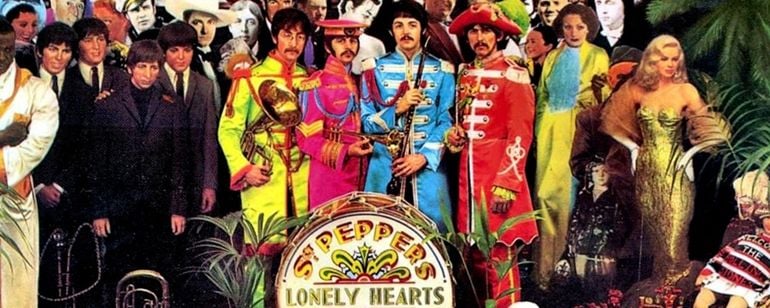
BEATLES MOVIE ABOUT SGT PEPPER ALBUM SCORES SALES DEAL

Documentary marks the 50th anniversary of the seminal album.
A new Beatles film marking the 50th anniversary of the iconic band’s seminal album ‘Sgt Pepper’s Lonely Hearts Club Band’ is in post-production.
It Was Fifty Years Ago Today…Sgt Pepper And Beyond, directed by Alan G. Parker (Hello Quo), will be sold internationally by former IM Global executive Tim Grohne’s Primal Screen.
Image result for It Was Fifty Years Ago Today…Sgt Pepper And Beyond, directed by Alan G. Parker

The film picks up on The Beatles as they end their gruelling tour schedule in August 1966 (coincidentally following on from Ron Howard’s recent Beatles documentary Eight Days A Week) to return to the studio to record the landmark ‘Sgt. Pepper’ album.
As one of the biggest selling records of all time, described by Rolling Stone magazine simply as “The most important rock & roll album ever made…”, ‘Sgt Pepper’ (released in June 1967) marked a pivotal moment in the 60’s, cementing the advent of Psychedelia and the Summer of Love. 
The album includes classic songs Lucy In The Sky With Diamonds and When I’m Sixty Four.
The film will journey through various solo projects to the release of Strawberry Fields Forever/Penny Lane, touching on flower power, John Lennon meeting Yoko Ono, LSD, meditation, Jimi Hendrix, the death of Brian Epstein, Abbey Road Studios and the Magical Mystery Tour.
“We’re combining first-hand accounts of the events that allowed ‘Sgt. Pepper’ to happen with rare and unseen footage that we’ve forensically unearthed from mainstream archives and private collectors. The last days of touring…. the execution of the album…. and the aftermath that it left behind will, I hope, give the audience an intimate sense of the band, the time and the impact of this extraordinary album,” Parker commented.
Among the interviewees featured in the film are Hunter Davies (the band’s official biographer), Pete Best (the band’s original drummer), music manager Simon Napier-Bell and author Philip Norman, who has written biographies of the Beatles and Rolling Stones and of Paul McCartney among others.
The film will not feature music from the group but has a score from tribute band The Bootleg Beatles, which has existed since 1980.
Director Parker is a writer and documentary maker whose previous music-themed films include Who Killed Nancy? and Hello Quo.
Grohne, who is also the film’s executive producer, will begin sales on the title at the European Film Market in Berlin next month.


source:screendaily

Wednesday, 18 January 2017

PAUL SUES SONY OVER BEATLES MUSIC

Paul McCartney is suing Sony/ATV in an effort to reclaim the copyright on his earliest songs, decades after he lost control of the Beatles catalog to Michael Jackson.

Sony/ATV completed purchase of this cache of legendary tunes last year, just before McCartney became eligible to reassert partial ownership again based on a provision of the U.S. Copyright Act of 1976. Since then, Sony/ATV has apparently ignored McCartney’s requests to discuss a future transfer.

“Paul McCartney has today filed a lawsuit in federal court in New York against Sony/ATV to confirm his ownership in his U.S. reversionary copyrights – which are granted to him by U.S. copyright law – in the songs he wrote with John Lennon and recorded with the Beatles,” a McCartney spokesperson tells Pitchfork.

According to the Copyright Act, tracks written before 1978 – which include all of the Beatles’ output – revert back to the composers after 56 years. His earliest work with Lennon would become available in 2018, then continue reverting yearly through the anniversary of the Beatles’ dissolution in 2025.

TMZ first reported that McCartney had filed “legal docs” to force Sony/ATV’s hand. “McCartney’s tried numerous times to get confirmation Sony will transfer the rights without a fight,but says he kept getting the run around.”
Sony/ATV issued a statement tonight saying the company has “the highest respect for Sir Paul McCartney, with whom we have enjoyed a long and mutually rewarding relationship with respect to the treasured Lennon and McCartney song catalog. We have collaborated closely with both Sir Paul and the late John Lennon’s estate for decades to protect, preserve and promote the catalog’s long-term value. We are disappointed that they have filed this lawsuit which we believe is both unnecessary and premature.”

Rights to Beatles tunes will still be controlled outside the U.S. by Sony/ATV, and McCartney will only receive 50 percent ownership since he shared composing credit with Lennon. His widow Yoko Ono reportedly struck a deal in 1990 – 10 years after Lennon was tragically murdered – to keep control through the duration of the copyright.
This saga actually dates back to 1985, when the late Jackson memorably out-maneuvered McCartney to purchase the Beatles’ catalog. A former musical partner of McCartney’s, Jackson ended up paying more than $47 million to buy ATV, the company that had owned the Beatles copyrights since 1967. Jackson then sold half of his share to Sony for $100 million a decade later.
The remainder of his interest in the old songs was then purchased by Sony/ATV in 2016 for some $750 million, as Jackson’s estate tried to offset mounting debts.


source:ultimateclassicrock

BEATLES FIRST U.S. CHART APPEARANCE

A few weeks’ ago, Best Classic Bands commemorated the U.S. release of The Beatles’ “I Want to Hold Your Hand,” which occurred on December 26, 1963. This day is notable for The Beatles first U.S. chart appearance. 

It’s hard to imagine – impossible really – but Capitol Records, which is essentially synonymous with the rise of The Beatles in America, had turned down their sister U.K. label Parlophone’s efforts to release the group’s singles stateside.
That all changed with “I Want To Hold Your Hand.” The single was released in the U.K. on November 29, 1963, though it took two weeks to hit #1 there where the group’s “She Loves You” was ensconced.
Capitol had scheduled it for a mid-January 1964 release but clever U.S. radio DJs who were privy to the song’s overseas success arranged to get copies shipped to them and began playing the import early. This forced Capitol’s hand – they actually contemplated seeking a court order to halt airplay. They wisely recognized that they could use the radio activity to their advantage and the single’s release date was moved up to December 26th to “Capitol”-ize on the demand. (OK, we made that word up.) With the floodgates opened, the 45 is reported to have sold 250,000 copies within days.
How amazing is that picture sleeve? Look closely and you’ll see Paul McCartney holding a cigarette.
On January 18, 1964, “I Want To Hold Your Hand” debuted on the Hot 100 Singles Chart at #45. The Beatles’ impact in America cannot be overstated: When the song hit #1 two weeks’ later on February 1, 1964, it became the first of seven #1 singles they achieved in a one-year period, launching both Beatlemania and the British Invasion.


source:bestclassicbands

50 YEARS AFTER SGT PEPPER, PAUL AND RINGO ARE BACK ON ARTIST PETER BLAKE’s CANVAS

 “Sgt. Pepper’s Lonely Hearts Club Band,” the greatest album of all time, turns 50 on June 2nd in the US (June 1st in the UK.) The very famous cover was made by artist Peter Blake. It’s probably the most parodied cover in rock history.

Now Blake has sent himself up with a 2017 edition mural to cover the Mandarin Oriental Hotel in London during renovations. The massive blow up features celebrities who regularly stay in the hotel from Sigourney Weaver and Morgan Freeman to David Oyelowo and Dame Edna.
Ringo really got a nice spot in the center on the front panel. Paul’s portrait, which is larger, appears on the side panel. This is as close as Sgt. Pepper’s Lonely Hearts Club Band can come to getting back together again.
There are 100 celebs on the mural, and it’s an eclectic group that also features Jane Seymour and Helen Mirren. 


source:showbiz411

JOHN's CAR SET TO SELL FOR UP TO £2.4MILLION

John’s vintage Mercedes-Benz 230SL Roadster could fetch up to £2.4millionas it goes to auction.
The custom-made vehicle was bought by the Imagine star in 1965, the same year The Beatles released their hit ‘Drive My Car’.
It is being sold by Worldwide Auctioneers and founder and auctioneer John Kruse, says the vehicle is especially rare as John Lennon owned ‘very few cars’ because he ‘disliked’ driving.
John, 36, said: “He actually ordered this car new and specifically to suit his tastes, a lot of folks don’t realise this but John was not fond of driving so there aren’t many cars that he owned.


“It’s really hard to compare this car to anything else, there have been a couple of other cars he owned for a brief time but I don’t believe they were ordered new.
“When you’re near or inside the car, you just think ‘John Lennon sat here and used this’, which makes it more special.
“I’ve often wondered how many songs and particularly Beatles hits he would have sang in his head while driving around in it, the possibilities are endless, it’s neat to imagine that.
“Because John Lennon was not a big driver and didn’t really like driving an automobile, it was used more for the convenience of going from Point A to Point B as a quick mode of transport.

“It was his personal car, not one used for commercial purposes, so he had it for every day transportation.
“We know he didn’t drive it very far, as it didn’t have many kilometres on the car.
“But through that, there’s a personal aspect of being able to experience what he experienced in the car, which is pretty neat.”
When ordering the Mercedes-Benz, the former-Beatles superstar had the vehicle custom fitted with right-hand drive and automatic transmission.
John added: “One thing he specifically ordered was the automatic transition, this is a bigger thing because of the time and effort to specially order this car.
“When any of us go to purchase a car there’s a lot of factors that go into it, such as where it was manufactured or built.

“Given the travels of the Beatles in Hamburg, he specifically ordered a German car, which certainly lends to the thought it was specific and intentional.”
Lennon owned the vehicle for four years before it was sold privately to a couple in the UK and for the past 17 years it has been on display in a Florida museum.
The car - Lot Number 17 - currently has a reserve of £96,000.
John said: “It really transcends the vintage car market to pop culture, music in general, as well as people with celebrity interest and car folk.
“This is why we go to auction with an item like this, it’s the best form of a true market place, as bidders get to set the price.
“I’m as excited as is everyone to see what the market believe it’s worth.
“Whatever it’s worth to any bidder they should participate, the last thing someone wants to do is find out it sold for a price they would have easily paid.”

Tuesday, 17 January 2017

YANNI ALEXIS MARDAS ("MAGIC ALEX") DIED FRIDAY AT THE AGE OF 74

Yanni "John" Alexis Mardas, or "Magic Alex" as he was known in the Beatles universe when he was among Apple Corps' earliest employees, died Friday at the age of 74.
CNN Greece (via Billboard) reports that Mardas died of natural causes in his Athens, Greece apartment.


John Lennon was first introduced to Mardas, an Athens-born artist who had exhibits at the Beatles-frequented Indica Gallery in London, through the Rolling Stones' Brian Jones; Mardas had created a psychedelic light show for the Stones' Their Satanic Majesties' Request tour.
Lennon soon became enthralled with Mardas' "Nothing Box" – a blinking light box that stimulated Lennon's LSD trips – and recruited the Greek expatriate, now dubbed "Magic Alex," into the Beatles' inner circle, employing Mardas as the head of Apple Electronics.

"I invented a large number of electronic devices, none of which had anything to do with music of the business of the Beatles," Mardas said in a 2010 statement after suing the New York Times for defamation after the newspaper called him a charlatan.
"It must be remembered that none of these had even been thought about by others at the time, although most of them are now in common use," citing the "memory phone" and "the composing typewriter," which worked off voice recognition.
In 1968, Mardas, who previously claimed to have the technological wherewithal to construct a 72-track tape machine, was placed in charge of building the Beatles a new recording studio in the basement of Apple's Savile Row headquarters; that project was scrapped soon after Beatles manager Allen Klein was brought in to straighten out the hemorrhaging Apple Corps. Following that incident, Mardas and Apple Corps parted ways.

"Magic Alex" accompanied the Beatles on their visit to India to study transcendental meditation under Maharishi Mahesh Yogi. Mardas also served a pivotal role when Lennon attempted to leave then-wife Cynthia Lennon for Yoko Ono.
"I've come with a message from John," Mardas told Cynthia Lennon after John and Ono departed together for New York. "He is going to divorce you, take Julian away from you and send you back to Hoylake."
Lennon recognized Mardas as the co-writer of the Beatles outtake "What's the New Mary Jane," although "Magic Alex" was not officially given a songwriting credit on the Lennon/McCartney track. Mardas also made an appearance in the band's Magical Mystery Tour film.